
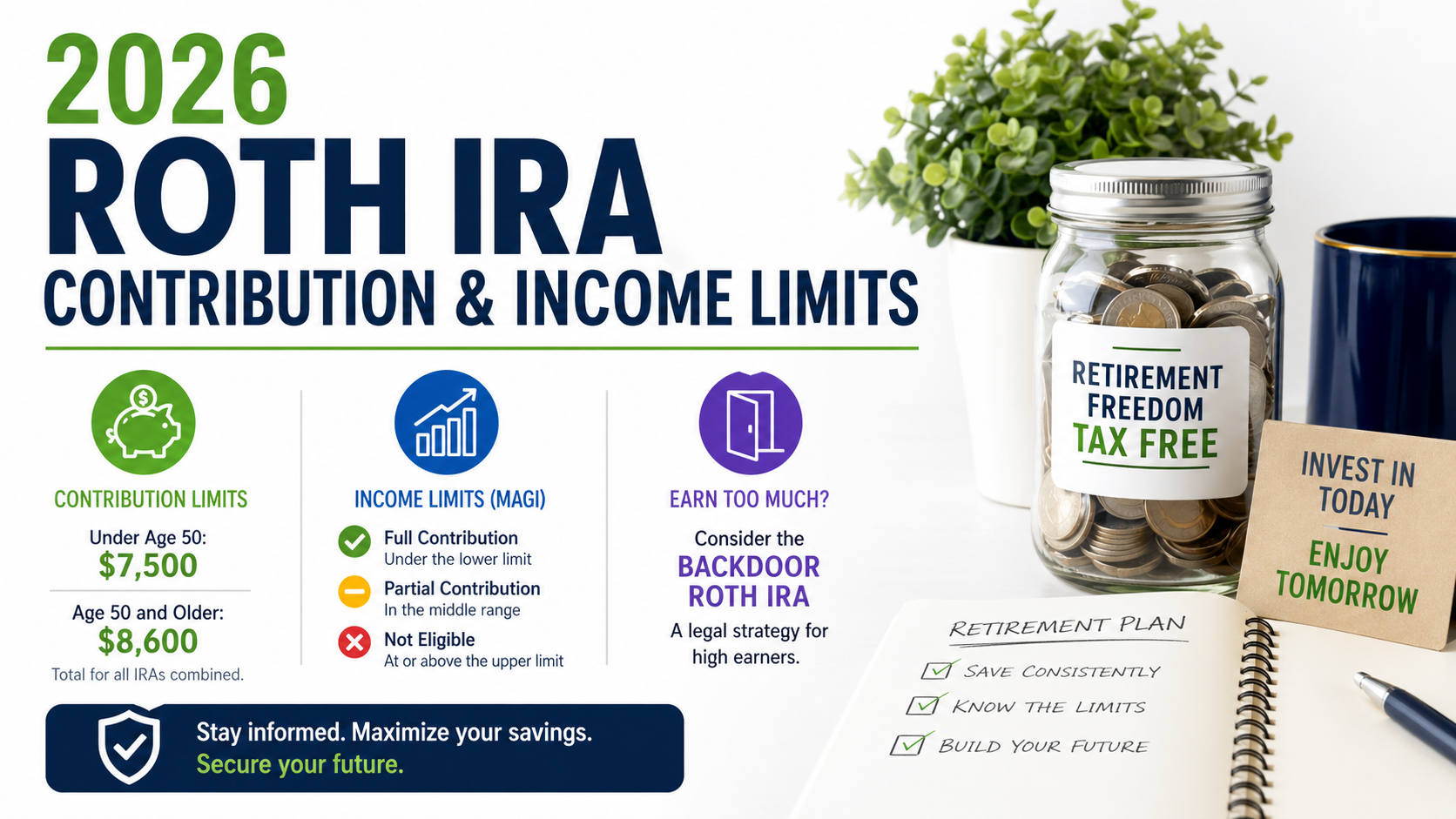
Roth IRAs are powerful tools for building retirement wealth that grows free of taxes. However, the IRS frequently updates the rules regarding how much you can contribute and who is eligible to contribute directly. Whether you are just starting your retirement journey or looking to maximize your nest egg, understanding the latest numbers is essential.
2026 Contribution Limits
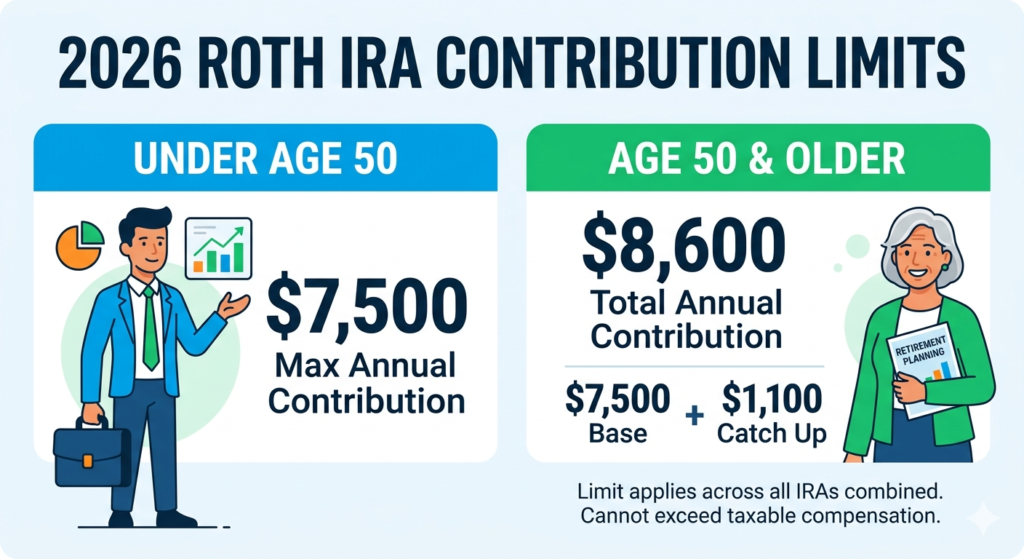
The IRS increased the baseline contribution limits for the 2026 tax year. Your age dictates your maximum allowed contribution.
- Under Age 50: The maximum contribution is $7,500.
- Age 50 and Older: You are eligible for an additional catch up contribution, bringing your total allowed maximum to $8,600.
Remember that this limit applies to all your IRAs combined. If you have both a Traditional IRA and a Roth IRA, your total deposits across both accounts cannot exceed these annual figures. Furthermore, you cannot contribute more than your total taxable compensation for the year.
2026 Income Limits (MAGI)
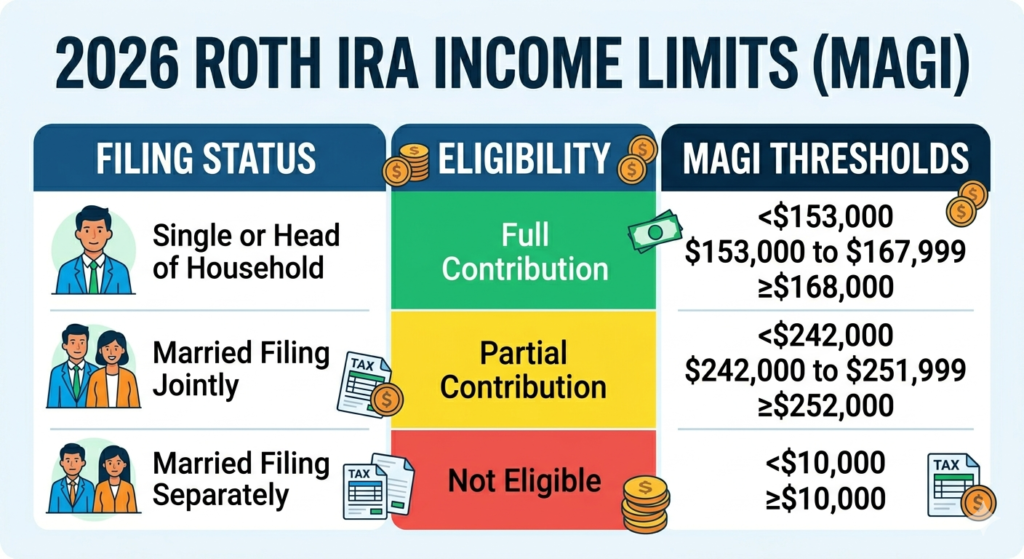
Roth IRAs have income restrictions based on your tax filing status and your Modified Adjusted Gross Income, commonly known as MAGI. If your income exceeds certain thresholds, your ability to contribute directly drops to a partial amount and eventually reaches zero.
Here is the breakdown for the 2026 tax year:
Single or Head of Household
- Full Contribution: MAGI under $153,000
- Partial Contribution: MAGI between $153,000 and $167,999
- Not Eligible: MAGI of $168,000 or higher
Married Filing Jointly
- Full Contribution: MAGI under $242,000
- Partial Contribution: MAGI between $242,000 and $251,999
- Not Eligible: MAGI of $252,000 or higher
Married Filing Separately
- Partial Contribution: MAGI under $10,000
- Not Eligible: MAGI of $10,000 or higher
What If You Earn Too Much?
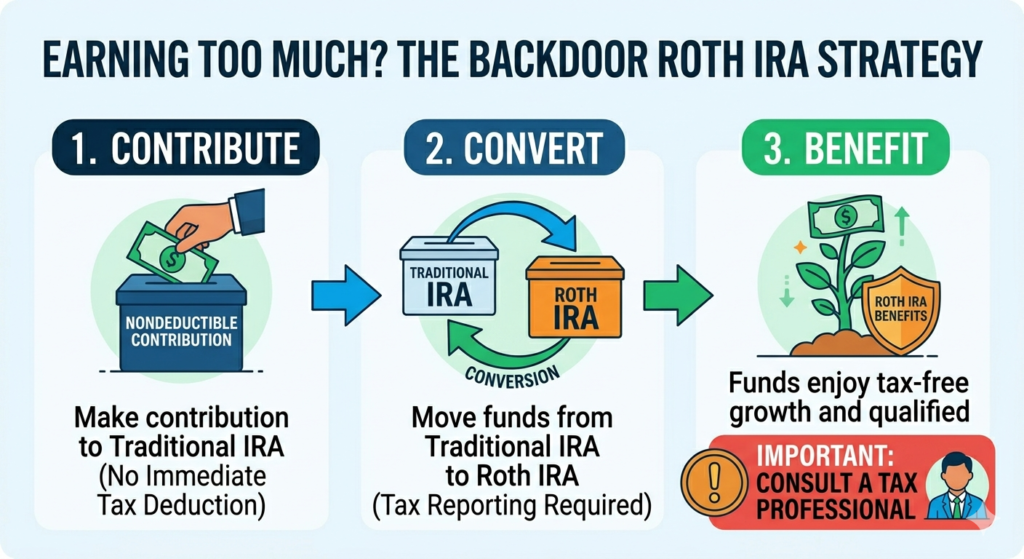
If your income pushes you over the allowable limits, you are not entirely out of luck. Many high earners utilize a strategy called a Backdoor Roth IRA. This involves making a nondeductible contribution to a Traditional IRA and then converting those funds into a Roth IRA. While perfectly legal, it involves specific tax reporting steps. Consulting a qualified tax professional is highly recommended before executing this maneuver to avoid unexpected tax bills.
Conclusion
Staying on top of the latest IRS limits ensures you can maximize your retirement savings without facing accidental excess contribution penalties. Be sure to review your savings strategy regularly and adjust your automated investments to take full advantage of the 2026 limits.