
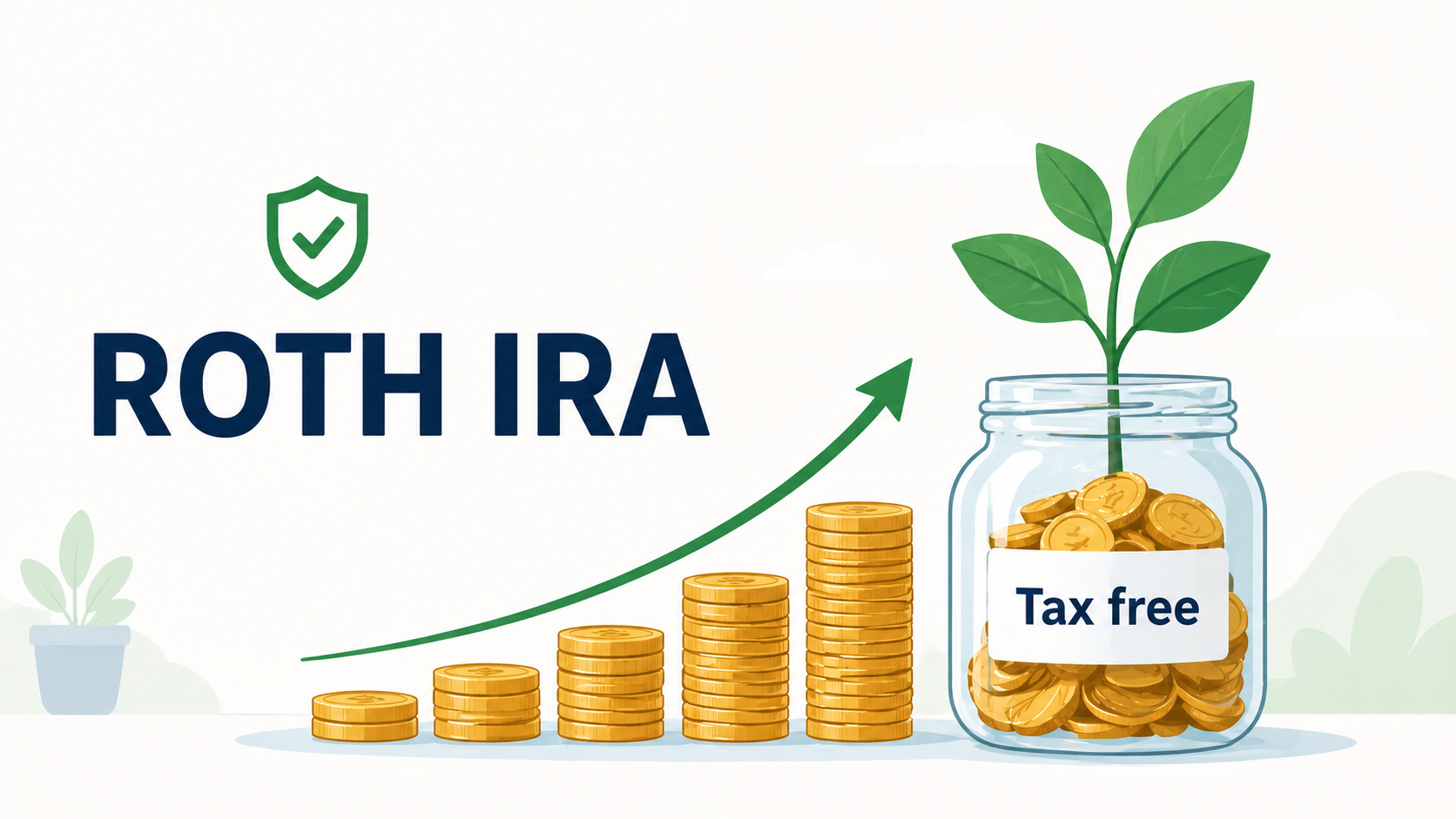
When it comes to saving for the future, not all accounts are created equal. While the traditional 401(k) or IRA might be the “standard” choice, the Roth IRA is often the secret weapon of savvy investors.
The primary difference lies in when you pay the taxman. With a Roth IRA, you contribute “after-tax” dollars—meaning you don’t get a tax break today, but the rewards down the road are significant.
1. Tax-Free Growth and Withdrawals
The most celebrated benefit of the Roth IRA is its tax treatment. Because you’ve already paid taxes on the money you contribute, your investments grow entirely tax-free. When you reach age 59½ and have held the account for five years, every penny you take out is yours to keep.
Imagine contributing $6,500 today and watching it grow to $50,000 over several decades. In a traditional account, you’d owe the IRS a chunk of that $50,000. In a Roth IRA, the full amount goes into your pocket.
Related:
Roth IRA Contribution vs Investment: Why Contributing to a Roth IRA Isn’t the Same as Investing
What Makes Roth IRA Withdrawals Tax-Free?
2. No Required Minimum Distributions (RMDs)
Most retirement accounts force you to start taking withdrawals once you hit age 73 (as of current laws). These are called Required Minimum Distributions. The Roth IRA is different.
- Flexibility: You can leave the money in the account for as long as you live.
- Wealth Transfer: If you don’t need the funds, a Roth IRA is an incredible tool for heirs, as they can inherit the tax-free growth benefits.
3. Early Withdrawal Flexibility
Life is unpredictable. While you should always aim to leave retirement funds untouched, the Roth IRA offers a safety net that other accounts don’t. Since you already paid taxes on your contributions, you can withdraw those specific dollars at any time, for any reason, without taxes or penalties.
Note: This only applies to the money you put in, not the interest or gains earned. Touching the “earnings” before age 59½ usually triggers penalties.
4. Hedging Against Future Tax Hikes
We don’t know what tax brackets will look like in 20 or 30 years. If you believe that tax rates will be higher in the future than they are now, the Roth IRA is a brilliant hedge. By paying taxes at today’s rates, you lock in your “cost” and protect yourself from future legislative changes that might increase income tax.
Is a Roth IRA Right for You?
The Roth IRA is particularly powerful for:
- Young Professionals: People currently in a lower tax bracket who expect to earn more later in their careers.
- Early Retirees: Those who want more control over their taxable income in retirement to keep their tax brackets low.
- Long-term Investors: Anyone who wants to maximize the power of compound interest without a future “tax bill” looming over their gains.
Summary Table: Roth IRA at a Glance
| Feature | Roth IRA Benefit |
|---|---|
| Contributions | Made with after-tax dollars |
| Withdrawals | Tax-free (after age 59½ and 5-year rule) |
| RMDs | None during the original owner’s lifetime |
| Principal | Can be withdrawn penalty-free at any time |
Choosing a Roth IRA is essentially a bet on yourself and your future growth. By taking the tax hit now, you clear the path for a much simpler, tax-free retirement later.