
Auditing, Accountability & Transparency in Public Finance
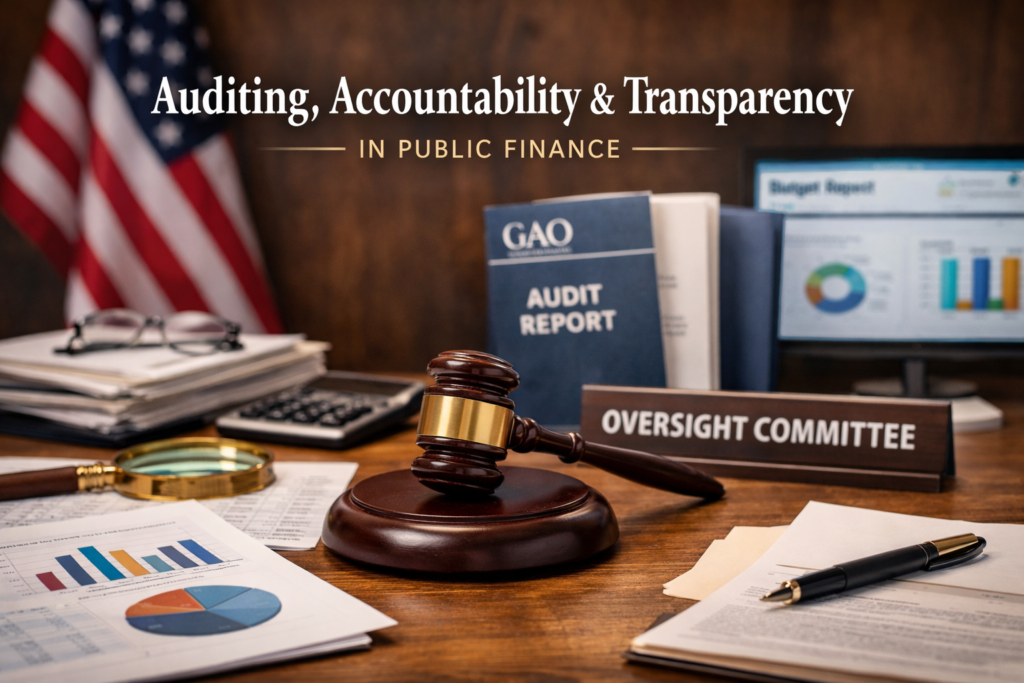
Public finance rests on public trust. Auditing, accountability, and transparency are the core practices that protect taxpayer resources, ensure lawful spending, and sustain confidence in government decision making. Together, they form a system of checks that guides how public money is planned, spent, measured, and reported.
Why These Principles Matter
Strong fiscal governance reduces waste, deters fraud, and improves results. When residents can see how funds are used and officials can be held responsible for outcomes, policy debates become more informed and service delivery improves.
Auditing
Auditing provides independent assurance that public funds are managed according to law, policy, and sound financial practice. It tests whether financial statements are reliable and whether programs operate as intended.
What Audits Examine
Audits go beyond basic bookkeeping. They assess systems, controls, and performance.
- Financial accuracy and completeness
- Compliance with statutes and regulations
- Internal controls over spending and reporting
- Program efficiency and effectiveness
Types of Public Sector Audits
Different audits answer different questions and serve distinct oversight needs.
- Financial audits confirm whether statements fairly present results
- Compliance audits verify adherence to legal requirements
- Performance audits evaluate economy, efficiency, and effectiveness
Who Conducts Audits
Independent audit institutions and inspectors general play a central role in safeguarding public resources, alongside legislative oversight bodies.
Accountability
Accountability defines who is responsible for decisions and outcomes. It connects authority with obligation and consequences.
Lines of Responsibility
Clear roles ensure that planning, execution, and oversight are not concentrated in a single place.
- Elected officials set priorities and authorize budgets
- Agencies manage programs and expenditures
- Oversight bodies review results and enforce standards
Enforcement and Consequences
Accountability has meaning when findings lead to action. Corrective plans, sanctions, and budget adjustments translate oversight into improved practice.
Institutional Oversight
Organizations such as the Government Accountability Office and inspectors general provide independent evaluations that inform lawmakers and the public.
Transparency
Transparency makes information accessible, understandable, and timely. It allows residents, journalists, and stakeholders to see how public money moves from appropriation to impact.
What Transparency Looks Like
Effective transparency emphasizes clarity over volume. Data should be usable, not merely disclosed.
- Clear budgets and financial reports
- Plain language explanations of programs
- Open meeting records and decisions
- Regular performance updates
Benefits of Open Information
When information is visible, trust improves and errors surface earlier.
- Stronger public confidence
- Better policy debate
- Earlier detection of risks
- Improved service outcomes
Managing Tradeoffs
Transparency must protect sensitive data while still providing meaningful insight. Sound disclosure policies balance openness with security and privacy.
How the Three Work Together
Auditing, accountability, and transparency reinforce one another. Transparency supplies information, auditing verifies it, and accountability ensures results.
A Continuous Cycle
Public finance oversight is not a one time event. It is an ongoing cycle that supports learning and improvement.
- Plans and budgets are published
- Spending and results are audited
- Findings lead to corrective action
- Updated information is disclosed
The Role of Budget Institutions
Central budget offices, including the Office of Management and Budget, set standards for reporting and performance that support consistency across government.
What Strong Systems Achieve
Well designed oversight systems do more than prevent misuse. They help governments deliver value.
Practical Outcomes
- Reduced waste and duplication
- More credible financial statements
- Programs aligned with stated goals
- Durable public trust in fiscal management
Conclusion
Auditing, accountability, and transparency are not abstract ideals. They are practical tools that protect public resources and improve results. When implemented together and taken seriously, they form the foundation of responsible public finance and informed democratic governance.