
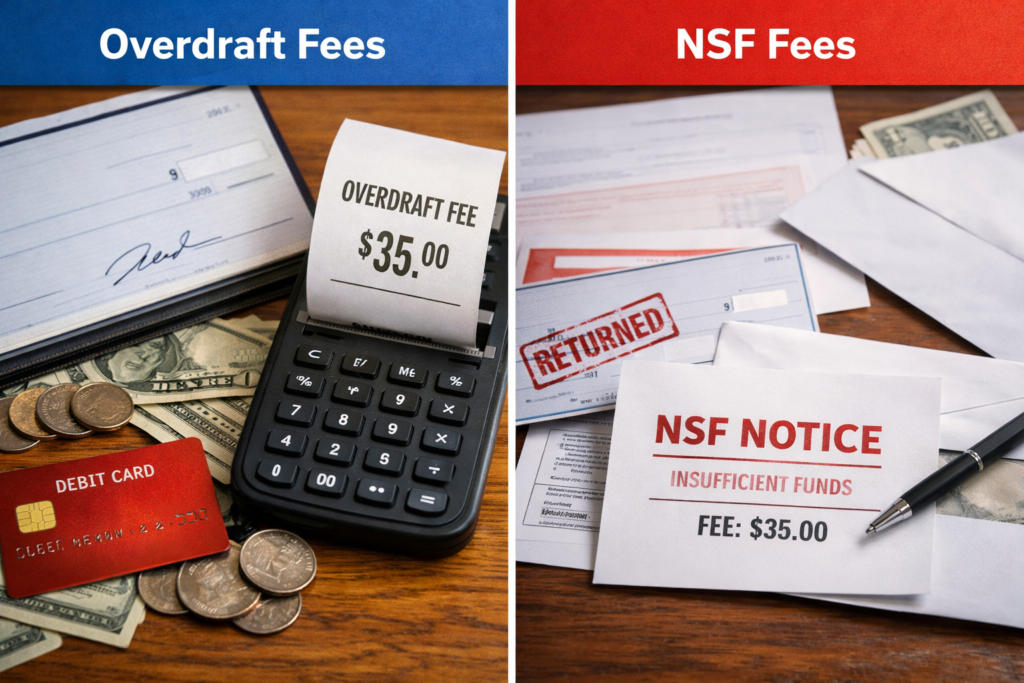
What Overdraft Fees Are
An overdraft fee is charged when a bank allows a transaction to go through even though there are not enough funds in the account to cover it. This usually happens when a customer has opted into overdraft coverage for debit card purchases or checks.
Banks treat overdrafts as a short-term advance. The institution temporarily covers the shortfall and then charges a fee for that service. These fees can apply per transaction, meaning multiple purchases can trigger multiple charges in a short period.
How Overdraft Fees Commonly Occur
Overdraft fees most often appear during everyday spending. They are tied to transactions that the bank approves despite insufficient funds.
- Debit card purchases at stores or online
- Checks written for rent or bills
- Automatic bill payments that exceed the account balance
What NSF Fees Are
An NSF fee, or non-sufficient funds fee, is charged when a bank rejects a transaction because the account balance is too low. Instead of covering the payment, the bank declines it and applies a fee for processing the failed transaction.
NSF fees are common with checks and electronic payments. The merchant or service provider does not receive payment, which can also result in additional penalties outside of the bank fee.
How NSF Fees Typically Happen
NSF fees usually occur when payments are attempted without enough money available and overdraft coverage is not used.
- Checks that are returned unpaid
- Automatic bill payments that are declined
- Electronic transfers that fail due to low balance
Key Differences Between Overdraft Fees And NSF Fees
The primary difference lies in whether the bank approves or rejects the transaction. Overdraft fees apply when the bank pays the transaction, while NSF fees apply when the bank refuses it.
Both fees can be costly, but their impact on cash flow and relationships with merchants can differ significantly.
Side By Side Comparison
- Overdraft fees allow the transaction to go through
- NSF fees result in a declined or returned payment
- Overdraft fees may occur multiple times in one day
- NSF fees can lead to merchant penalties or late fees
How Much These Fees Usually Cost
Fee amounts vary by financial institution, but both overdraft and NSF fees are often considered high relative to the transaction amount. A single mistake can result in a charge that exceeds the original purchase.
Many banks charge similar amounts for overdraft and NSF fees, though policies are changing as consumer protection rules evolve. Some institutions cap daily fees or offer grace periods.
Typical Cost Ranges
- Overdraft fees often range from $25 to $35 per transaction
- NSF fees commonly fall within a similar range
- Additional fees may apply if the payment is retried
How To Reduce Or Avoid These Fees
Avoiding overdraft and NSF fees requires active account management. Understanding how transactions post and monitoring balances closely can significantly reduce risk.
Banks also offer tools and account features designed to help customers stay within their available funds.
Practical Prevention Strategies
- Set up low balance alerts
- Keep a buffer amount in the account
- Link a savings account for overdraft protection
- Review automatic payments regularly
Choosing The Right Account Setup
Account features determine how overdraft and NSF fees apply. Some checking accounts offer no overdraft coverage, while others provide alternatives with lower costs.
Factors To Consider When Comparing Accounts
- Overdraft coverage options
- Fee caps or fee-free overdrafts
- Mobile alerts and balance tracking tools
Selecting an account that matches spending habits is a critical step in minimizing unnecessary fees.