
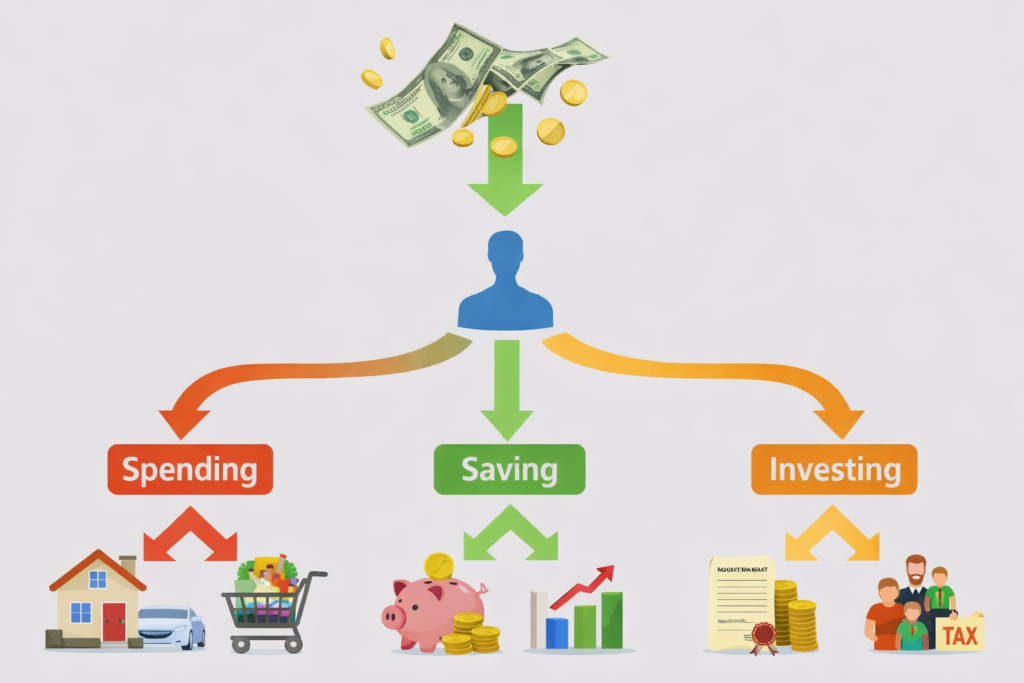
Money affects nearly every decision you make, whether you notice it or not. Understanding how money moves through your life brings clarity, control, and long term stability.
How Money Enters Your Life
Money typically enters your life through a limited number of channels. These sources form the foundation of your financial system and determine how flexible or constrained your choices can be.
Income is not just about how much you earn, but how predictable and scalable that income is over time. A stable inflow allows planning, while unstable income requires stronger buffers.
Common Income Sources
Most people rely on a combination of these income streams at different stages of life.
- Wages or salary from employment
- Income from self employment or business activity
- Investment income such as interest or dividends
- Government benefits or transfers
- Occasional income such as bonuses or gifts
Each source has different levels of reliability, growth potential, and risk. Understanding those differences is essential before deciding how to use the money.
How Money Gets Spent
Once money enters your life, it immediately begins flowing outward. Spending is the most visible part of your financial life, yet it is often the least examined.
Spending decisions reflect priorities, habits, and constraints. Without structure, spending tends to expand to match income, leaving little room for progress.
Core Spending Categories
Most expenses fall into a few broad groups that shape your monthly cash flow.
- Housing and utilities
- Food and daily living costs
- Transportation and commuting
- Insurance and healthcare
- Discretionary spending such as entertainment
Separating essential spending from optional spending creates awareness. This awareness is what allows deliberate tradeoffs instead of automatic decisions.
How Money Is Used To Build Stability
Not all money is meant to be spent. Some of it plays a defensive role, protecting you from disruption and stress.
This stage of money flow is about resilience. It ensures that unexpected events do not force high cost decisions or long term setbacks.
Financial Buffers And Protection
Stability focused money usually moves into these areas.
- Emergency savings for short term disruptions
- Insurance premiums to transfer risk
- Cash reserves for irregular expenses
These uses may feel unproductive in the short term, but they prevent small problems from becoming financial crises.
Related: Saving
How Money Grows Over Time
After stability is established, money can be directed toward growth. This is where long term progress becomes visible.
Growth focused money is patient. It is not meant for immediate use, but for future needs and opportunities.
Common Growth Channels
Money intended to grow typically flows into structured vehicles.
- Retirement accounts
- Taxable investment accounts
- Business reinvestment
- Education and skill development
The key principle is time. The earlier money enters this stage, the more powerful its impact becomes.
Related: Investment, Retirement Planning
How Money Leaves Your Life Permanently
Eventually, money exits your life for the final time. This stage is often overlooked, yet it reflects values and planning discipline.
Permanent outflows are not mistakes. When planned, they serve meaningful purposes beyond personal consumption.
Final Destinations Of Money
Money often leaves your control in these ways.
- Taxes and required obligations
- Support for family members
- Charitable giving
- Transfers through inheritance
Intentional planning ensures these outflows align with your goals rather than default outcomes.
Bringing The Flow Together
Money is not static. It continuously moves through stages of earning, spending, protecting, growing, and exiting. Problems arise when one stage dominates while others are ignored.
A clear view of this flow allows better decisions at every level. When you understand where your money comes from, where it goes, and why, financial confidence becomes a logical result rather than a hopeful one.