
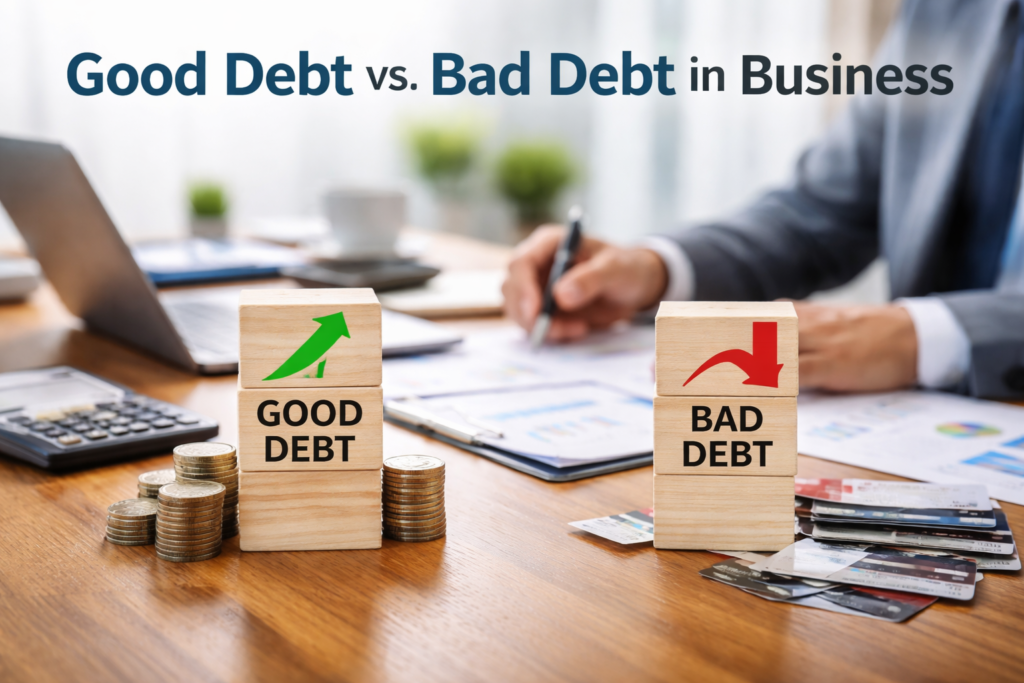
Debt is a common part of running a business. From startups to established companies, borrowing money is often necessary to grow, stabilize cash flow, or invest in new opportunities. However, not all debt works in your favor. Some debt strengthens a business over time, while other debt quietly drains resources and limits future options.
Understanding the difference between good debt and bad debt is critical for making sound financial decisions. This distinction is not about whether debt is inherently right or wrong. It is about how the debt is used, how it is structured, and whether it creates long term value.
What Business Debt Really Represents
Debt is essentially a tool. Like any tool, its impact depends on how it is used and maintained.
In business, debt represents borrowed capital that must be repaid with interest. When used strategically, it allows a company to act faster than it could using only internal cash. When used carelessly, it can create pressure that overwhelms operations.
Why Businesses Take on Debt
Most companies do not borrow money out of convenience. They borrow to solve specific problems or pursue defined opportunities.
Common reasons include:
- Funding expansion into new markets
- Purchasing equipment or technology
- Smoothing short term cash flow gaps
- Investing in revenue generating assets
Debt becomes problematic when it is taken on without a clear plan or realistic repayment path.
Defining Good Debt in Business
Good debt supports growth, efficiency, or long term profitability. It has a clear business purpose and a reasonable expectation of return.
This type of debt is aligned with the company’s strategy and financial capacity. It strengthens the balance sheet over time rather than weakening it.
Characteristics of Good Business Debt
Good debt typically shares several key traits:
- Used to acquire assets that generate revenue
- Improves productivity or lowers operating costs
- Has manageable interest rates and repayment terms
- Matches the lifespan of the asset being financed
For example, financing equipment that increases output or reduces labor costs can be considered good debt if the added value exceeds the cost of borrowing.
Common Examples of Good Debt
Some typical forms of good business debt include:
- Loans for equipment, machinery, or vehicles used in operations
- Financing for inventory that turns quickly into sales
- Borrowing to expand a proven product or service
- Commercial real estate loans for income producing property
In each case, the debt supports activities that help the business earn more than it spends.
Defining Bad Debt in Business
Bad debt does not contribute to growth or profitability. It often funds expenses that do not produce lasting value or cover short term problems without addressing root causes.
This type of debt increases risk without improving the company’s ability to repay it.
Characteristics of Bad Business Debt
Bad debt usually shows warning signs early on:
- Used for operating losses without a recovery plan
- Carries high interest rates or unfavorable terms
- Funds expenses that do not generate revenue
- Creates ongoing reliance on borrowing to survive
When debt becomes a substitute for fixing underlying business issues, it is almost always harmful.
Common Examples of Bad Debt
Examples of debt that often falls into the bad category include:
- High interest credit cards used for routine expenses
- Loans taken to cover persistent payroll shortfalls
- Borrowing for non essential upgrades or perks
- Cash advances with aggressive repayment structures
These forms of debt tend to shrink flexibility and increase financial stress over time.
How to Evaluate Whether Debt Is Good or Bad
The difference between good and bad debt is not always obvious at first glance. A structured evaluation can help clarify whether borrowing makes sense.
Key Questions to Ask Before Borrowing
Before taking on any business debt, decision makers should ask:
- Will this debt directly increase revenue or reduce costs
- Can the business comfortably service the debt under conservative assumptions
- Does the repayment timeline align with the expected benefits
- What happens if the projected return takes longer than expected
Clear answers to these questions reduce the risk of taking on harmful obligations.
Understanding Opportunity Cost
Debt should also be evaluated against alternative uses of capital. Even affordable debt has a cost.
Consider whether borrowing will prevent the business from:
- Building cash reserves
- Investing in higher return opportunities
- Responding to unexpected disruptions
Good debt leaves room for flexibility. Bad debt narrows future choices.
The Role of Cash Flow in Debt Decisions
Cash flow matters more than profit when it comes to debt. A profitable business can still fail if it cannot meet its payment obligations.
Debt that looks reasonable on paper can become dangerous if cash flow timing is misaligned.
Matching Debt Payments to Cash Flow
Smart borrowing aligns repayment schedules with cash inflows.
For example:
- Seasonal businesses benefit from flexible or seasonal repayment terms
- Long term assets should be financed with longer term debt
- Short term working capital needs should not rely on long term obligations
When payments arrive before revenue does, even good debt can become a problem.
How Good Debt Can Turn Into Bad Debt
Even well intentioned borrowing can become harmful if conditions change.
Market shifts, cost increases, or slower sales can reduce the expected return from borrowed funds. If the business does not adjust quickly, manageable debt can turn into a burden.
Warning Signs to Watch For
Early indicators that debt is becoming unhealthy include:
- Increasing reliance on new debt to pay existing obligations
- Declining cash reserves despite stable revenue
- Rising interest costs consuming operating income
- Reduced ability to invest in core activities
Monitoring these signals allows businesses to take corrective action before debt spirals out of control.
Practical Guidelines for Smarter Debt Use
Debt should support a long term vision, not compensate for short term pressure.
Clear policies and disciplined decision making help businesses avoid costly mistakes.
Best Practices for Managing Business Debt
Consider adopting the following principles:
- Borrow with a defined purpose and measurable outcome
- Avoid mixing personal and business debt
- Regularly review debt ratios and coverage metrics
- Prioritize transparency in financial reporting
These habits encourage accountability and better financial judgment.
Conclusion
Debt is neither good nor bad by default. Its impact depends entirely on how it is used and managed.
Good debt fuels growth, improves efficiency, and strengthens a business over time. Bad debt erodes stability, limits options, and increases risk. The difference lies in purpose, structure, and realistic expectations.