
Derivative Instruments

Derivative instruments are a foundational component of modern financial markets. They play a critical role in risk management, price discovery, market efficiency, and speculative activity. At their core, derivatives are financial contracts whose value is derived from an underlying asset, index, rate, or event. These underlying elements can include equities, commodities, currencies, interest rates, credit instruments, or market indices.
Derivatives are widely used by corporations, financial institutions, governments, and individual investors. While they are sometimes associated with complexity and financial crises, derivatives themselves are neutral tools. Their impact depends on how they are structured, regulated, and used. A clear understanding of derivative instruments is therefore essential for anyone seeking to understand global financial markets.
Posts on Derivatives Instruments

What Are Derivative Instruments?
Derivative instruments are contracts between two or more parties that specify payments based on changes in the value of an underlying variable. Unlike traditional securities such as stocks or bonds, derivatives do not usually involve ownership of the underlying asset.
The defining characteristics of derivative instruments include:
- A clearly defined underlying asset or reference variable
- A contractually agreed payoff structure
- A future settlement date or contingent settlement condition
Derivatives can be traded on organized exchanges or negotiated privately in over-the-counter markets. Their design allows participants to transfer, transform, or manage financial risk with precision.
Key Purposes of Derivatives
Derivatives exist because they serve several important economic functions. Their usefulness extends well beyond speculation.
Risk Hedging
One of the primary purposes of derivatives is hedging. Hedging involves reducing or eliminating exposure to unwanted price movements. For example, an airline may use fuel derivatives to lock in fuel costs, while an exporter may hedge currency risk.
By allowing risks to be separated and transferred, derivatives enable businesses to focus on their core operations without being unduly exposed to market volatility.
Price Discovery
Derivative markets contribute to price discovery by reflecting market expectations about future prices, interest rates, and volatility. Futures and options markets often incorporate information faster than spot markets.
This forward-looking nature helps participants form expectations and make informed financial decisions.
Market Efficiency and Liquidity
Derivatives improve market efficiency by enabling arbitrage and facilitating the alignment of prices across markets. They also add liquidity, as traders can gain exposure to assets without directly buying or selling the underlying instruments.
Speculation and Trading
Speculators use derivatives to profit from anticipated price movements. Because derivatives often require relatively small upfront capital, they allow traders to take leveraged positions. While this can amplify returns, it also increases potential losses.
Major Types of Derivative Instruments
Derivative instruments can be broadly categorized based on their contractual structure and payoff mechanics.
1. Futures Contracts
Futures contracts are standardized agreements to buy or sell an underlying asset at a predetermined price on a specified future date. They are traded on regulated exchanges and are subject to daily settlement through a clearinghouse.
Key Features of Futures
- Standardized contract terms
- Exchange-based trading
- Daily marking to market
- Margin requirements for participants
Futures are commonly used for commodities, stock indices, interest rates, and currencies. Exchanges such as Chicago Mercantile Exchange play a central role in facilitating futures trading globally.
Economic Role of Futures
Futures markets help producers and consumers manage price risk while allowing speculators to provide liquidity. Their standardized nature enhances transparency and reduces counterparty risk.
2. Forward Contracts
Forward contracts are customized agreements between two parties to buy or sell an asset at a future date for a price agreed upon today. Unlike futures, forwards are typically traded over the counter.
Characteristics of Forwards
- Customized contract terms
- No daily settlement
- Higher counterparty risk
- Limited liquidity compared to futures
Forwards are commonly used in currency and interest rate markets, especially by corporations with specific hedging needs.
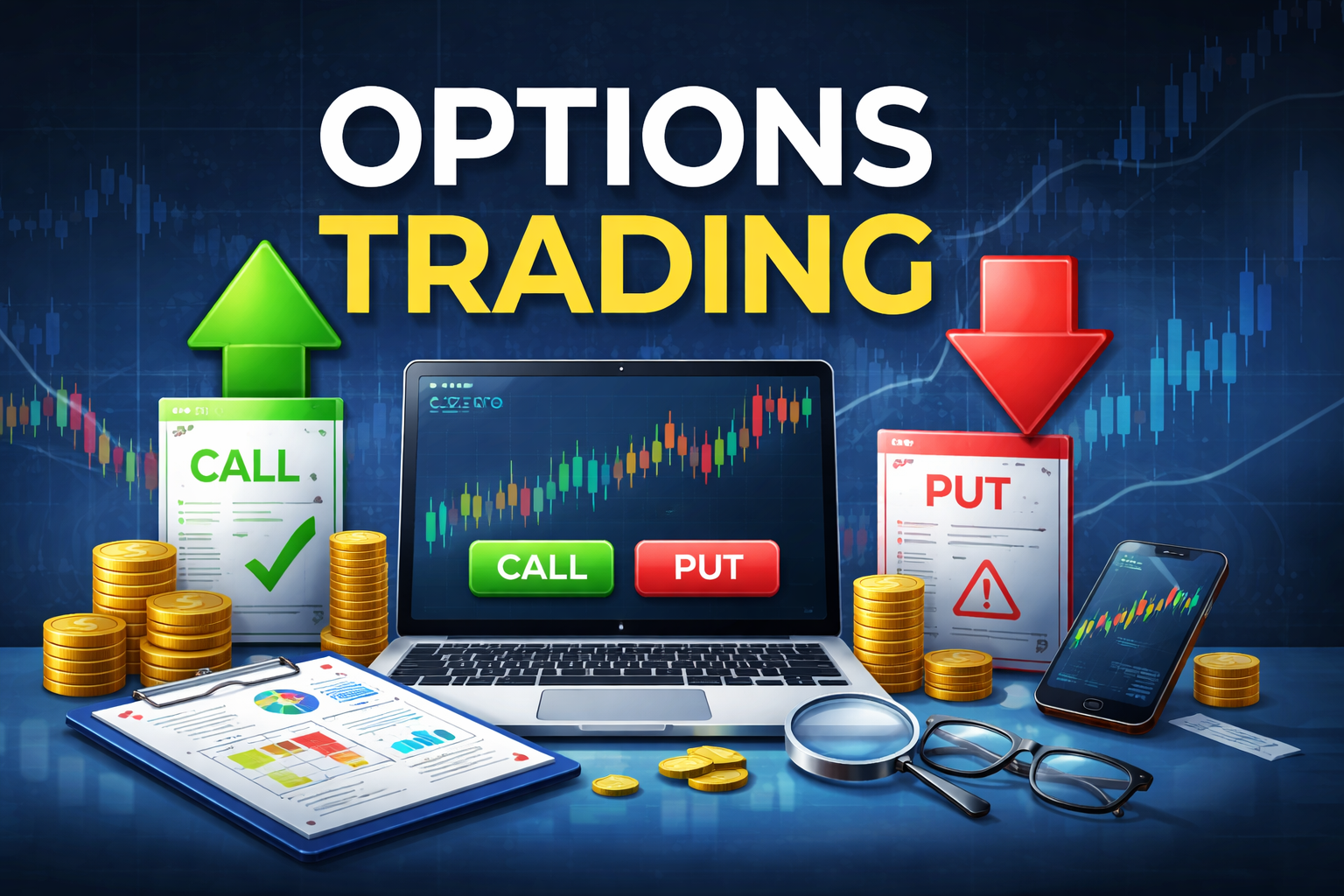
3. Options Contracts
Options provide the holder with the right, but not the obligation, to buy or sell an underlying asset at a specified price within a defined time period. The buyer pays a premium for this right.
Types of Options
- Call options, which grant the right to buy
- Put options, which grant the right to sell
Options can be traded on exchanges or over the counter. Their asymmetric payoff structure makes them particularly useful for managing downside risk while preserving upside potential.
Strategic Use of Options
Options are widely used for hedging, income generation, and volatility trading. Their flexibility allows for complex strategies tailored to specific market views and risk tolerances.
4. Swaps
Swaps are derivative contracts in which two parties agree to exchange cash flows according to predefined rules. They are among the most widely used derivative instruments in institutional finance.
Common Types of Swaps
- Interest rate swaps
- Currency swaps
- Credit default swaps
- Commodity swaps
Interest rate swaps, for example, allow one party to exchange fixed interest payments for floating-rate payments. These contracts are essential tools for managing interest rate exposure.
Over-the-Counter Nature of Swaps
Most swaps are traded over the counter and documented using standardized frameworks developed by organizations such as International Swaps and Derivatives Association. This standardization improves legal certainty and operational efficiency.
Credit Derivatives
Credit derivatives are designed to transfer credit risk from one party to another. The most well-known example is the credit default swap.
Credit Default Swap
A credit default swap functions like insurance against the default of a borrower. One party pays a periodic fee, while the other agrees to compensate the buyer in the event of a defined credit event.
Credit derivatives allow financial institutions to manage credit exposure without selling underlying loans or bonds.
Exchange-Traded vs Over-the-Counter Derivatives
The market structure of derivatives significantly influences their risk profile and regulatory treatment.
Exchange-Traded Derivatives
Exchange-traded derivatives are standardized and cleared through central counterparties. This structure reduces counterparty risk and enhances transparency.
Examples include futures and many options contracts.
Over-the-Counter Derivatives
Over-the-counter derivatives are privately negotiated and tailored to specific needs. While they offer flexibility, they also carry higher counterparty and operational risks.
Regulatory reforms have increased reporting, collateralization, and clearing requirements for OTC derivatives to improve market stability.
Risks Associated with Derivative Instruments
While derivatives offer powerful benefits, they also introduce distinct risks that must be carefully managed.
Leverage Risk
Derivatives often involve leverage, meaning small price movements in the underlying asset can result in large gains or losses.
Counterparty Risk
In OTC markets, the risk that one party fails to meet its obligations is a critical concern.
Liquidity and Model Risk
Some derivatives may be difficult to exit during stressed market conditions. In addition, complex derivatives rely on valuation models that may not fully capture real-world dynamics.
Conclusion
Derivative instruments are indispensable tools in modern finance. They enable risk transfer, support efficient markets, and provide mechanisms for expressing informed views on future economic outcomes. Futures, forwards, options, swaps, and credit derivatives each serve distinct purposes and address different financial needs.
Understanding derivatives requires not only familiarity with their mechanics but also an appreciation of their economic role and associated risks. When used responsibly and supported by robust regulation, derivative instruments contribute significantly to the resilience and functionality of the global financial system.