
Funding and Capital Structure

Funding and capital structure are foundational concepts in business and corporate finance. They determine how an organization raises money, how risks and returns are distributed among stakeholders, and how resilient the business is during economic cycles. For entrepreneurs, executives, investors, and finance professionals, understanding funding choices and capital structure decisions is essential for building sustainable and scalable enterprises.
This article provides an in-depth explanation of funding and capital structure, their components, strategic considerations, and their impact on firm value and performance.
Posts on Funding and Capital Structure



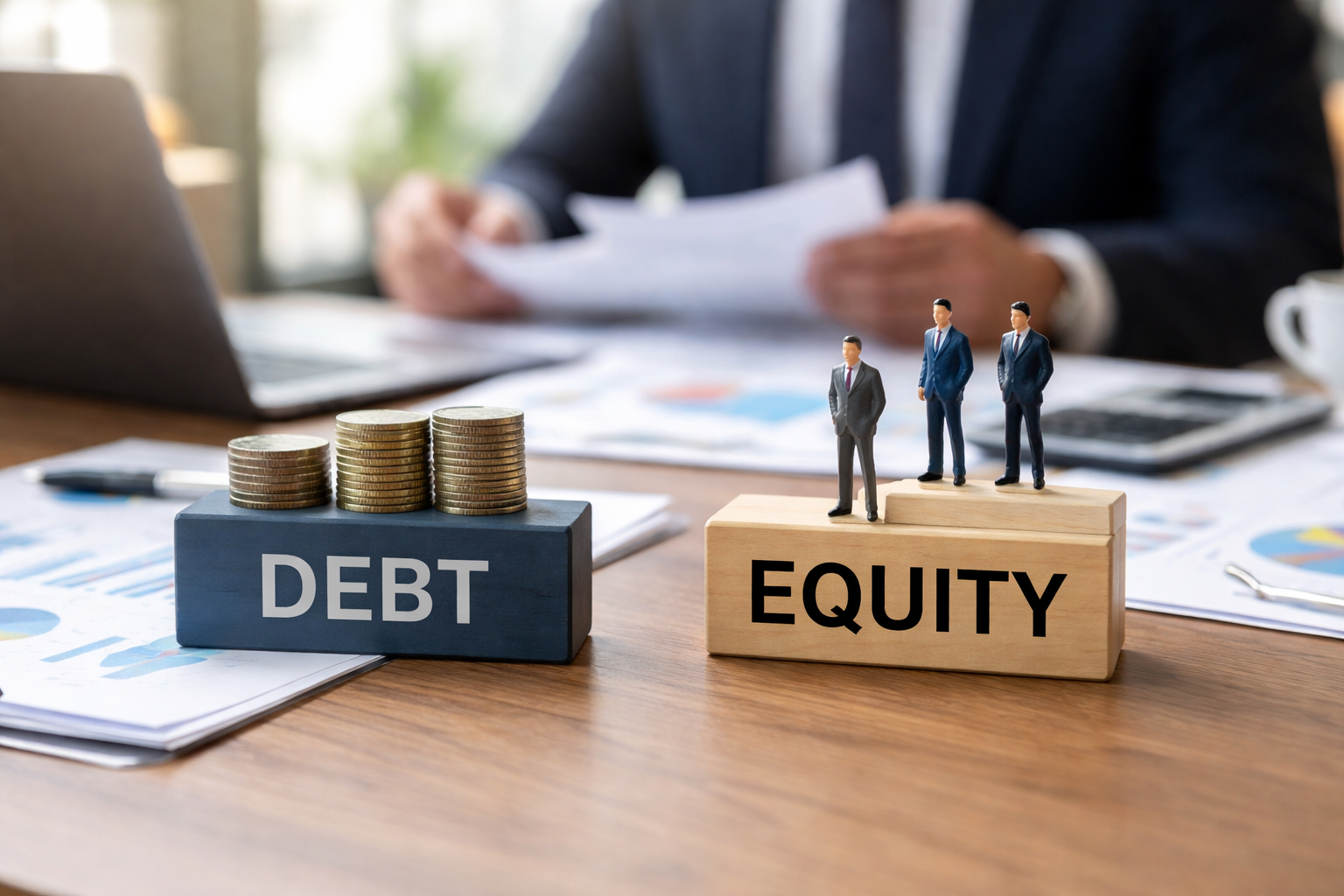

Understanding Business Funding
What Is Business Funding?
Business funding refers to the process of raising financial resources to start, operate, expand, or restructure a company. These funds are used to acquire assets, pay employees, invest in research, enter new markets, and manage working capital.
Funding is not a one-time activity. Most businesses move through multiple funding stages over their lifecycle, each with different financial instruments, expectations, and risk profiles.
Why Funding Decisions Matter
Funding decisions influence ownership control, cash flow obligations, financial risk, and long-term flexibility. Poor funding choices can constrain growth or lead to financial distress, while well-structured funding supports strategic objectives and stability.
Key reasons funding decisions are critical include:
- Impact on cost of capital
- Effect on ownership dilution
- Influence on financial risk and solvency
- Alignment with business growth stage
Sources of Business Funding
Internal Funding
Internal funding comes from resources generated within the business. It is often the first and least risky source of capital.
Common forms include:
- Retained earnings
- Operating cash flows
- Asset sales
Internal funding avoids interest costs and ownership dilution, but it may be limited in scale and insufficient for high-growth strategies.
External Funding
External funding is raised from parties outside the organization. It expands financial capacity but introduces new obligations or stakeholders.
Major categories of external funding include:
- Debt financing
- Equity financing
- Hybrid instruments
Each category carries distinct financial and strategic implications.
Debt Financing Explained
Nature of Debt Capital
Debt financing involves borrowing money that must be repaid over time, usually with interest. Lenders do not receive ownership but have contractual claims on cash flows and assets.
Debt is commonly used to finance predictable, cash-generating activities due to its fixed repayment structure.
Common Forms of Debt
Debt instruments vary in maturity, security, and repayment terms.
Typical forms include:
- Bank loans
- Corporate bonds
- Lines of credit
- Trade credit
Debt can be short-term or long-term, secured or unsecured, and fixed-rate or floating-rate.
Advantages and Risks of Debt
Debt offers several benefits but also increases financial risk.
Advantages include:
- No ownership dilution
- Tax-deductible interest in many jurisdictions
- Predictable repayment schedules
Risks include:
- Fixed payment obligations regardless of performance
- Increased bankruptcy risk during downturns
- Restrictive loan covenants
Equity Financing Explained
Nature of Equity Capital
Equity financing involves raising funds by selling ownership interests in the business. Investors receive residual claims on profits and assets, along with voting rights in many cases.
Equity is particularly important for early-stage and high-growth companies with uncertain cash flows.
Types of Equity Funding
Equity capital can come from various investor groups depending on the business stage.
Common sources include:
- Founders and promoters
- Angel investors
- Venture capital firms
- Public shareholders
Equity funding often brings strategic guidance and industry expertise alongside capital.
Advantages and Risks of Equity
Equity provides financial flexibility but comes with trade-offs.
Advantages include:
- No mandatory repayments
- Stronger balance sheet
- Risk sharing with investors
Risks include:
- Ownership dilution
- Potential loss of control
- Higher expected returns demanded by investors
Hybrid and Alternative Financing Instruments
Hybrid Capital Instruments
Hybrid instruments combine features of both debt and equity. They offer flexibility in structuring funding arrangements.
Examples include:
- Convertible bonds
- Preference shares
- Mezzanine financing
These instruments are often used in complex financing situations or growth-stage companies.
Alternative Funding Options
Beyond traditional financing, businesses increasingly use alternative funding mechanisms.
Notable examples include:
- Leasing and hire purchase
- Factoring and invoice discounting
- Crowdfunding
- Strategic partnerships
Alternative funding can improve liquidity and reduce reliance on traditional lenders.
What Is Capital Structure?
Definition of Capital Structure
Capital structure refers to the mix of debt, equity, and hybrid instruments a company uses to finance its operations and assets. It represents how the firm’s total capital is distributed among different claimholders.
Capital structure is typically expressed as ratios such as debt-to-equity or debt-to-total-capital.
Capital Structure vs Funding
Funding focuses on the act of raising capital, while capital structure reflects the cumulative outcome of those funding decisions. Capital structure is a snapshot of the firm’s long-term financial architecture.
Key Components of Capital Structure
Equity Component
The equity portion represents ownership capital contributed by shareholders and retained earnings accumulated over time. It absorbs losses first and provides a buffer against financial distress.
A strong equity base enhances creditworthiness and operational flexibility.
Debt Component
The debt portion consists of all interest-bearing obligations. It magnifies returns during profitable periods but increases vulnerability during downturns.
Debt levels must be aligned with cash flow stability and business risk.
Hybrid Component
Hybrid capital sits between debt and equity in terms of risk and return. It is often tailored to specific strategic or financial objectives.
Capital Structure Theories
Trade-Off Theory
The trade-off theory suggests firms balance the tax benefits of debt against the costs of financial distress. Optimal capital structure is achieved where marginal benefits equal marginal costs.
This theory explains why highly profitable firms often use moderate leverage rather than maximum debt.
Pecking Order Theory
The pecking order theory proposes that firms prefer funding sources in a specific order:
- Internal funds first
- Debt second
- Equity last
This behavior is driven by information asymmetry and issuance costs.
Agency Theory
Agency theory focuses on conflicts of interest between managers, shareholders, and debt holders. Capital structure choices can mitigate or exacerbate these conflicts depending on incentives and controls.
Factors Influencing Capital Structure Decisions
Business Risk
Companies with stable cash flows can safely carry higher debt levels, while volatile businesses require more equity to absorb fluctuations.
Industry characteristics play a major role in determining acceptable leverage.
Cost of Capital
Firms aim to minimize their overall cost of capital. The mix of debt and equity affects the weighted average cost of capital, which influences investment decisions and valuation.
Lower cost of capital enhances competitiveness and growth capacity.
Growth Opportunities
High-growth firms often rely more on equity to preserve flexibility and avoid restrictive debt obligations. Mature firms with steady earnings may emphasize debt financing.
Control and Ownership Considerations
Founders and promoters may prefer debt to avoid dilution, while investors may favor equity to gain governance influence.
Capital structure reflects not only financial logic but also control preferences.
Impact of Capital Structure on Firm Value
Financial Leverage and Returns
Leverage amplifies returns on equity when investments perform well. However, it also magnifies losses during poor performance.
The relationship between leverage and value depends on risk, cash flow stability, and market conditions.
Market Perception and Credit Ratings
Capital structure influences how markets perceive a firm’s risk profile. Excessive leverage can lower credit ratings and increase borrowing costs.
Balanced structures enhance investor confidence and valuation multiples.
Capital Structure Across the Business Lifecycle
Early-Stage Businesses
Startups rely heavily on equity due to uncertain cash flows and limited credit access. Founders and early investors bear high risk in exchange for growth potential.
Growth-Stage Businesses
As revenues stabilize, companies introduce debt to fund expansion. Hybrid instruments are also common during this phase.
Mature Businesses
Mature firms often optimize capital structure to maximize shareholder value, using leverage efficiently while maintaining financial stability.
Strategic Importance of Funding and Capital Structure
Long-Term Financial Sustainability
Well-designed capital structures support resilience during economic shocks and industry disruptions. They allow businesses to adapt without excessive financial strain.
Alignment With Corporate Strategy
Funding and capital structure decisions must align with strategic goals such as expansion, diversification, or consolidation. Finance serves strategy, not the other way around.
Conclusion
Funding and capital structure are central pillars of corporate finance. They shape a company’s risk profile, growth trajectory, and value creation potential. Understanding the sources of funding, the mechanics of debt and equity, and the strategic considerations behind capital structure enables better financial decision-making.
For businesses, the objective is not to maximize debt or equity but to design a capital structure that balances risk, cost, control, and flexibility. When funding decisions are made thoughtfully and aligned with long-term strategy, capital becomes a powerful enabler of sustainable business success.