
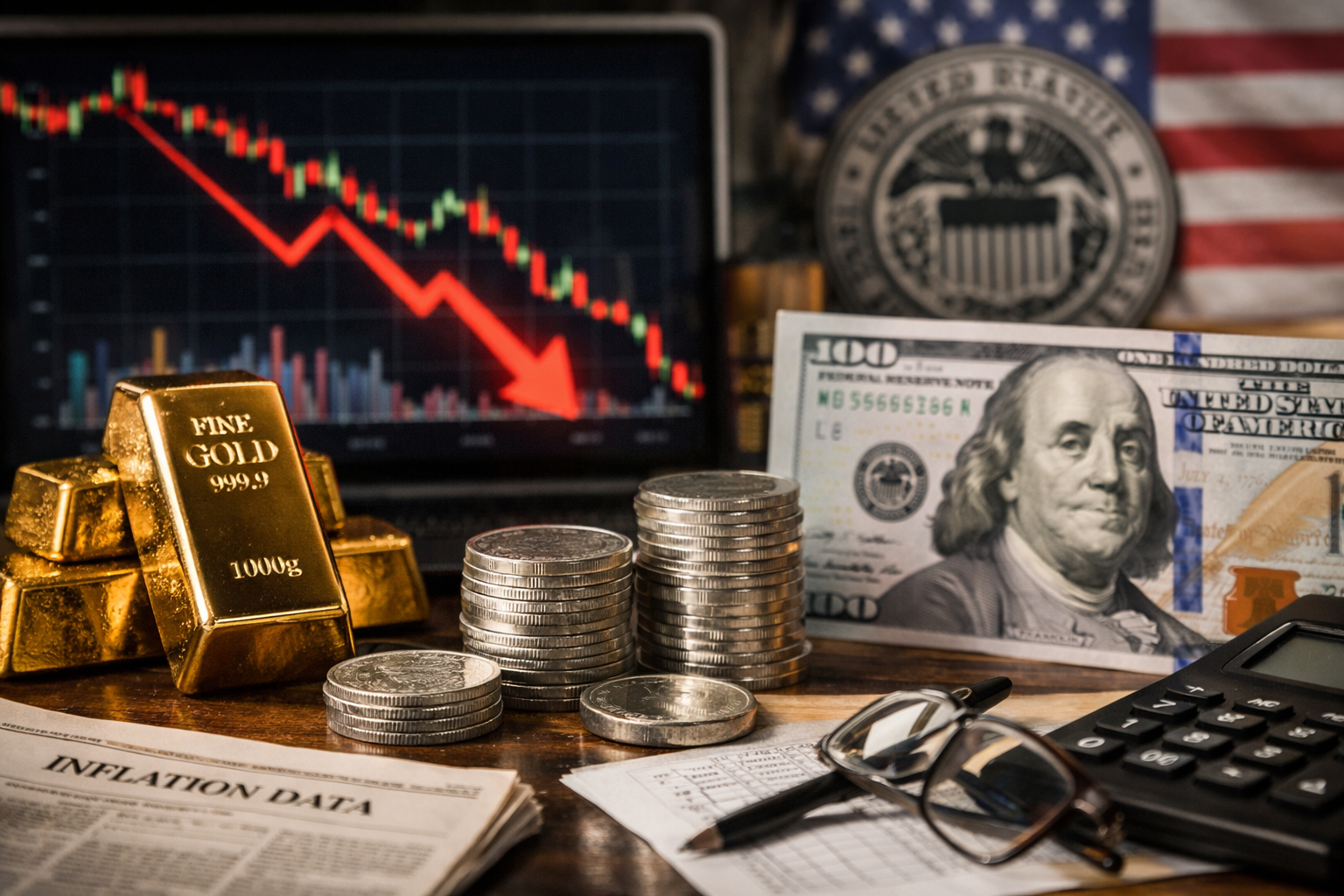
The sharp decline in gold and silver prices during February 2026 surprised many market participants. Assets often viewed as safe havens moved lower at the same time, triggering questions about what really drove the selloff.
Rather than a single shock, the downturn reflected a combination of macroeconomic forces, policy shifts, and positioning dynamics that came together quickly.
A Sudden Shift in Interest Rate Expectations
Gold and silver are highly sensitive to interest rate outlooks because they do not generate yield. In early February, expectations changed abruptly.
Market participants began to price in a longer period of restrictive monetary policy from the Federal Reserve. This reduced the appeal of holding non interest bearing assets.
Why Higher Rates Pressure Precious Metals
Rising rate expectations tend to strengthen competing assets.
- Higher bond yields increase the opportunity cost of holding gold and silver
- Cash and short term Treasuries become more attractive
- Speculative demand often retreats first when policy tightens
This shift alone did not cause the crash, but it set the stage for rapid selling.
Stronger Dollar Amplified the Decline
Precious metals are priced globally in dollars. When the dollar strengthens, gold and silver often face immediate headwinds.
In February 2026, the dollar rallied sharply on better than expected economic data and firm policy guidance. That currency move accelerated the decline already underway in metals.
Dollar Strength and Metal Prices
The relationship tends to work in predictable ways.
- A stronger dollar makes metals more expensive for overseas buyers
- Global demand can soften even if domestic conditions stay stable
- Algorithmic trading often reinforces the inverse correlation
As the dollar moved higher, selling pressure intensified across futures and spot markets.
Inflation Data Reduced Safe Haven Demand
One of the most important supports for precious metals is inflation fear. February data releases weakened that narrative.
Inflation readings showed continued moderation, reducing urgency to hedge purchasing power. This directly impacted gold and silver sentiment.
Changing Inflation Perceptions
When inflation fears ease, investor behavior adjusts quickly.
- Fewer inflows into inflation hedges
- More confidence in real yields staying positive
- Rotation toward growth and income focused assets
Without strong inflation anxiety, gold and silver lost a key pillar of support.
Heavy Futures Liquidation and Margin Pressure
The price drop accelerated once technical levels were breached. Futures markets played a major role.
Large speculative positions built earlier in the year were forced to unwind. Margin calls and stop losses triggered rapid liquidation, especially on major exchanges like COMEX.
How Leverage Turned a Pullback Into a Crash
Leverage can magnify both gains and losses.
- Falling prices trigger margin calls
- Traders sell to meet collateral requirements
- Liquidity thins during fast moves, worsening volatility
This mechanical selling created a cascade effect that pushed prices down faster than fundamentals alone would suggest.
Shifts in Investor Allocation Preferences
By early 2026, many investors had begun favoring assets tied to economic resilience rather than protection.
Equities linked to productivity gains and income generating instruments attracted fresh capital. Precious metals, by contrast, saw outflows from funds and managed accounts.
Capital Rotation Away From Metals
Portfolio rebalancing trends mattered more than headlines.
- Reduced demand from exchange traded products
- Increased allocation to yield producing assets
- Short term traders exiting crowded positions
This reallocation reinforced the downside momentum already in place.
What the February 2026 Crash Really Signaled
The gold and silver market crash of February 2026 was less about panic and more about repricing. Expectations around rates, inflation, and currency strength shifted quickly and leveraged positions amplified the move.
For long term observers, the episode highlighted how precious metals can remain vulnerable even in uncertain times. Their performance depends not only on fear, but on how economic reality compares to market expectations.