
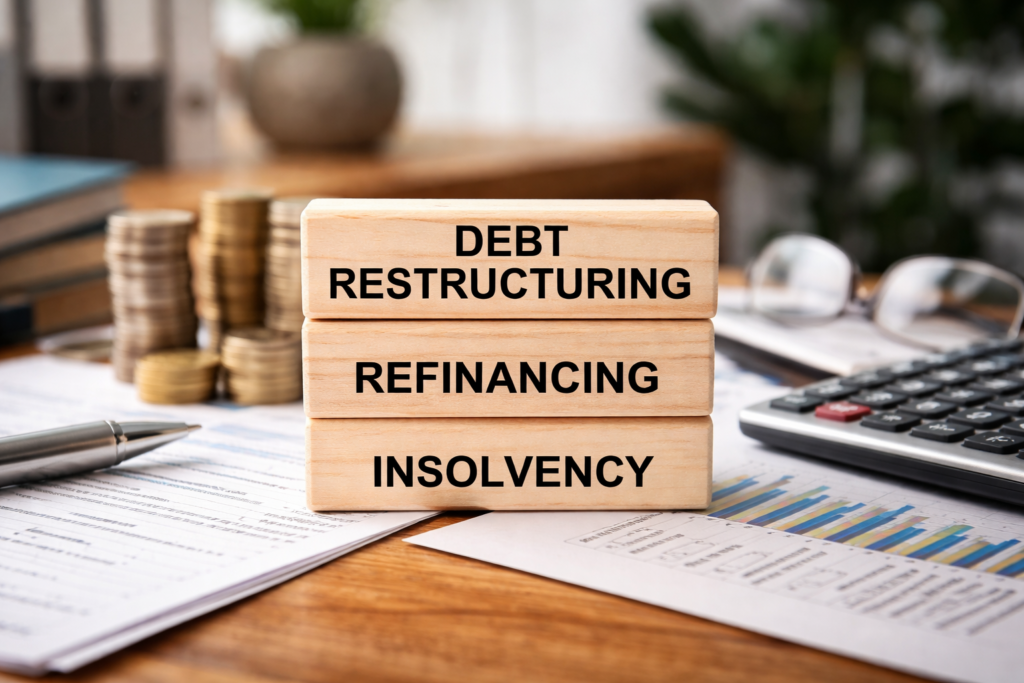
When debt becomes hard to manage, people and businesses often hear three terms come up again and again: debt restructuring, refinancing, and insolvency. They sound similar, but they mean very different things. Understanding the distinction matters because each option carries different risks, costs, and long-term consequences.
This article explains what each approach involves, when it is typically used, and how they compare, so you can better understand which path may fit a given financial situation.
Debt Restructuring
Debt restructuring focuses on changing the terms of existing debt to make repayment more manageable.
What debt restructuring means
Debt restructuring involves negotiating directly with creditors to modify the original agreement. The goal is not to replace the debt, but to adjust it so payments are more realistic given current financial conditions.
Common changes include lower interest rates, extended repayment periods, or partial forgiveness of what is owed.
When debt restructuring is used
This option is often considered when income has dropped or cash flow has tightened, but there is still an ability to repay over time.
It is commonly used by businesses facing temporary financial strain, as well as individuals dealing with reduced earnings or unexpected expenses.
Key characteristics of debt restructuring
- Existing loans remain in place with modified terms
- Creditors must usually agree to the changes
- Credit scores may be affected, but less severely than formal insolvency
- Requires proof that revised payments are sustainable
Refinancing
Refinancing replaces existing debt with a new loan, usually under different terms.
What refinancing means
Refinancing involves taking out a new loan to pay off one or more existing debts. The new loan may have a lower interest rate, a different repayment length, or a more predictable payment structure.
Unlike restructuring, refinancing does not rely on changing the original contract. It creates an entirely new one.
When refinancing is used
Refinancing is typically used when financial health is stable enough to qualify for a new loan. It is common when interest rates fall or when credit profiles improve.
People often refinance mortgages, student loans, or business loans to reduce monthly payments or total interest costs.
Key characteristics of refinancing
- Old debt is paid off and replaced with new debt
- Approval depends on creditworthiness and income
- Often improves cash flow if terms are favorable
- Usually has a smaller negative impact on credit than restructuring
Insolvency
Insolvency is a legal and financial state where debts cannot be paid as they come due.
What insolvency means
Insolvency occurs when liabilities exceed assets or when cash flow is insufficient to meet obligations. It often leads to formal legal processes that determine how debts are handled.
For individuals, this may involve bankruptcy proceedings. For businesses, it can include reorganization or liquidation.
When insolvency is used
Insolvency is generally a last resort. It is considered when debts are unmanageable and other solutions like restructuring or refinancing are no longer viable.
Legal protections may temporarily stop collection actions, but the long-term impact can be significant.
Key characteristics of insolvency
- Involves court or legal oversight
- Can result in discharge of certain debts
- Has a substantial and lasting effect on credit history
- May require selling assets or closing a business
Comparing the Three Options
While all three approaches address debt problems, they differ in purpose and impact.
How they differ in intent
Debt restructuring aims to adjust existing obligations. Refinancing aims to improve terms by replacing debt. Insolvency aims to resolve an inability to pay, often through legal means.
The choice depends on financial stability, available options, and how severe the debt situation has become.
Side by side overview
- Debt restructuring modifies current debt with creditor agreement
- Refinancing replaces debt with a new loan under different terms
- Insolvency formally addresses an inability to pay, often through courts
Each option sits on a spectrum, from proactive financial management to formal financial distress resolution.
Choosing the Right Path
There is no one size fits all solution to debt challenges. The right approach depends on income stability, asset levels, credit standing, and long-term goals.
Early action usually provides more options. Refinancing and restructuring are often more effective before financial pressure becomes overwhelming. Insolvency, while serious, can still offer a structured way forward when other avenues are no longer realistic.