
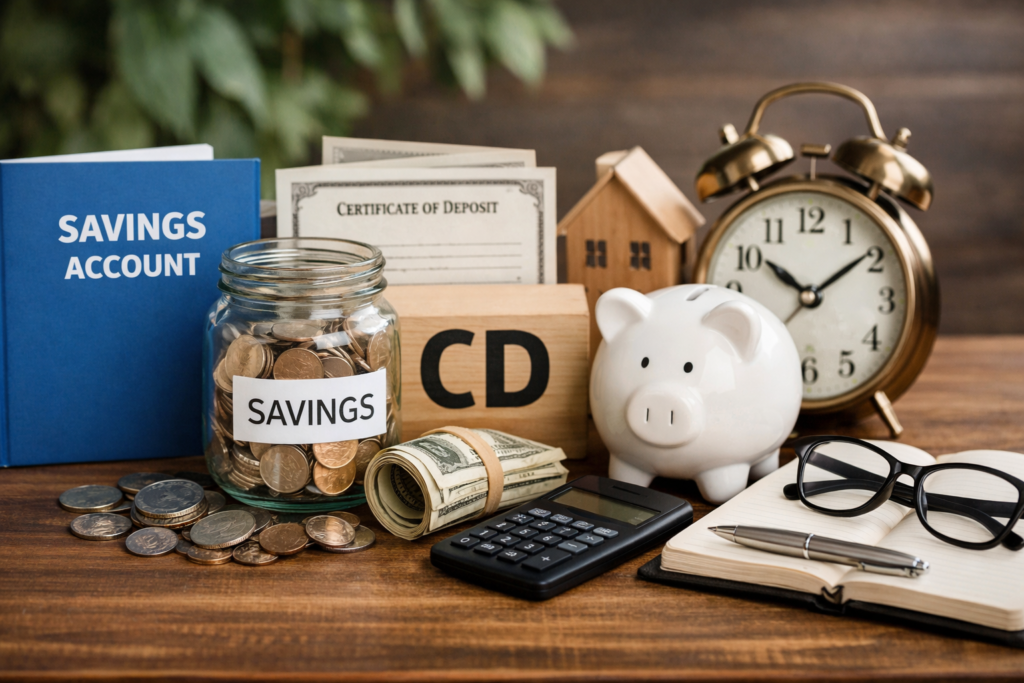
Choosing where to keep your savings is a foundational financial decision. The right choice protects your money, preserves purchasing power, and supports your broader financial goals. Savings should be accessible, secure, and appropriate for how soon you plan to use the funds.
Where To Keep Your Savings
Saving money is not just about setting it aside. It is also about choosing the right place so your money works efficiently while remaining safe. Different savings locations serve different purposes depending on time horizon, risk tolerance, and liquidity needs.
Savings Accounts
A savings account is often the starting point for building financial stability. It provides a secure place to store money while earning modest interest.
What A Savings Account Is Best For
Savings accounts are designed for short term needs and emergency funds. They prioritize safety and accessibility over high returns.
Key Characteristics
- Funds are easily accessible
- Deposits are typically insured
- Interest rates are usually lower than long term options
High Yield Savings Accounts
High yield savings accounts function similarly to traditional savings accounts but offer higher interest rates. These accounts are commonly offered by online banks.
When High Yield Savings Make Sense
They are well suited for emergency savings and short to medium term goals where preserving capital is critical.
Key Characteristics
- Higher interest rates than traditional savings
- Easy transfers and withdrawals
- Limited in person banking access
Related:
Best High-Yield Savings Accounts in 2026: Earn Up to 5.00% APY
High-Yield vs Traditional Savings: What is The Difference?
Money Market Accounts
Money market accounts combine features of savings and checking accounts. They usually offer better rates than basic savings accounts with slightly more restrictions.
Ideal Use Cases
These accounts work well for larger cash balances that may need occasional access.
Key Characteristics
- Competitive interest rates
- Limited monthly transactions
- Often require higher minimum balances
Certificates Of Deposit
Certificates of deposit are time based savings products. You agree to leave money untouched for a fixed period in exchange for a guaranteed return.
When To Use Certificates Of Deposit
They are best for money you do not need in the near future and want to protect from market volatility.
Key Characteristics
- Fixed interest rate
- Set maturity date
- Penalties for early withdrawal
Brokerage Cash Accounts
Some investment platforms offer cash accounts that pay interest on uninvested balances. These can be useful for individuals who actively manage investments.
Appropriate Situations
They are suitable for short term cash that may soon be invested.
Key Characteristics
- Interest on idle cash
- Not always designed for long term savings
- Insurance coverage may vary
Choosing The Right Option
The best place for your savings depends on your financial priorities. No single option fits every situation.
Factors To Consider
- How quickly you need access to the money
- Your tolerance for fluctuations in value
- The purpose of the savings
Using multiple savings vehicles is often a practical strategy. Emergency funds, short term goals, and long term plans benefit from being separated and stored appropriately.
Final Thoughts
Where you keep your savings directly affects financial security and flexibility. Selecting the right accounts ensures your money remains safe, accessible, and aligned with your goals. A thoughtful approach to savings placement strengthens the foundation of any financial plan.