
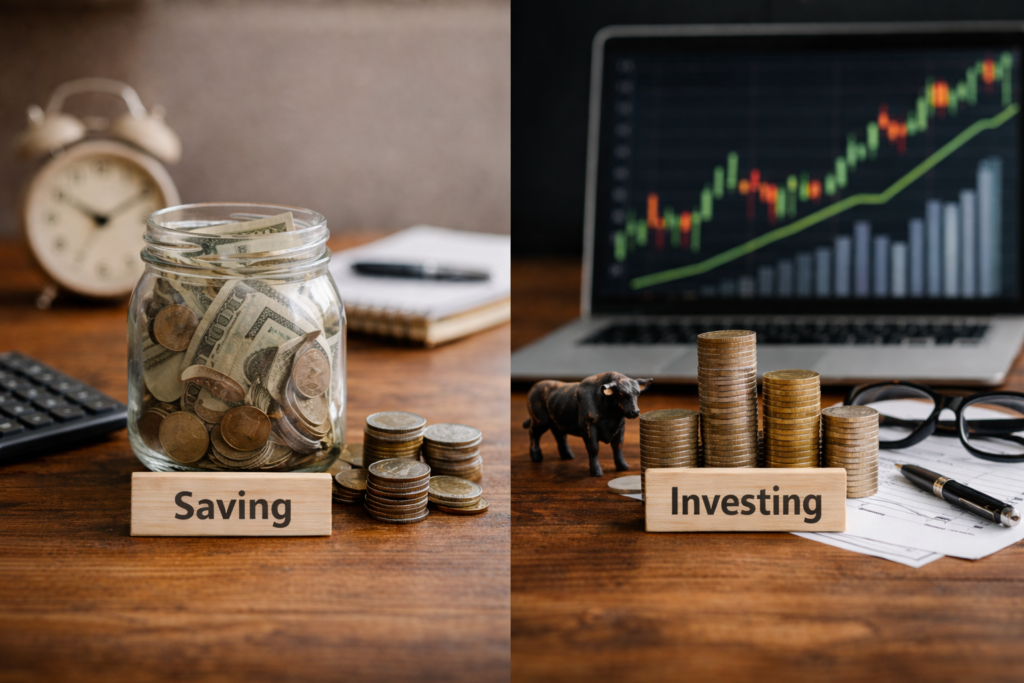
Understanding the difference between saving and investing is a foundational skill in personal finance. While both are essential to financial stability, they serve distinct purposes and require different approaches. This guide explains how saving and investing work, when each is appropriate, and how they fit into a long term financial strategy.
What Saving Is
Saving is the practice of setting aside money in secure and easily accessible places. The primary goal of saving is protection, not growth.
Savings are typically used for short term needs and unexpected expenses. They are designed to preserve money rather than expose it to risk.
Related: Saving
Key Characteristics Of Saving
Savings accounts and similar tools emphasize stability and liquidity. Returns are modest, but the money remains dependable.
Common traits of saving include:
- Low risk to principal
- High accessibility to funds
- Predictable but minimal returns
- Strong focus on short term security
What Investing Is
Investing involves putting money into assets with the expectation of growth over time. The purpose of investing is to increase purchasing power and build long term wealth.
Unlike saving, investing accepts uncertainty. Market movement can cause values to rise or fall, but historically investing has outpaced inflation over extended periods.
Key Characteristics Of Investing
Investments are suited for long term goals and require patience and discipline. They reward time in the market rather than quick access.
Common traits of investing include:
- Higher potential returns
- Exposure to market risk
- Lower short term liquidity
- Focus on long term growth
Related: Investing
Saving Vs Investing Key Differences
Saving and investing differ across purpose, risk, and time horizon. Understanding these distinctions helps determine where money should be allocated.
Saving prioritizes safety, while investing prioritizes growth. Each plays a non negotiable role in a balanced financial plan.
Core Differences At A Glance
- Saving protects money for near term use
- Investing grows money for future goals
- Saving minimizes risk
- Investing accepts volatility
- Saving suits emergencies
- Investing supports wealth building
When Saving Makes Sense
Saving is most appropriate when money may be needed soon or certainty is required. It acts as the first line of financial defense.
Before investing, individuals should establish sufficient savings to handle disruptions without selling investments at unfavorable times.
Common Saving Scenarios
- Emergency funds
- Upcoming large purchases
- Short term financial goals
- Income uncertainty periods
When Investing Makes Sense
Investing becomes essential once a stable savings base is established. It allows money to work over time and counteract inflation.
Long range objectives benefit most from investing, especially when time allows recovery from market downturns.
Common Investing Scenarios
- Retirement planning
- Long term wealth accumulation
- Education funding with long timelines
- Building financial independence
How Saving And Investing Work Together
Saving and investing are not competing choices. They function best as complementary tools within a broader strategy.
Savings provide stability and peace of mind. Investments provide growth and future opportunity. Excluding either creates imbalance and unnecessary risk.
Building A Balanced Approach
- Establish emergency savings first
- Maintain savings for short term needs
- Invest surplus income for long term goals
- Review and adjust allocations as life changes
Final Perspective
Saving and investing represent different financial priorities, not opposing philosophies. Mastery of personal finance comes from knowing when to use each and why.
A disciplined saver builds resilience. A disciplined investor builds wealth. Together, they form the backbone of lasting financial security.