
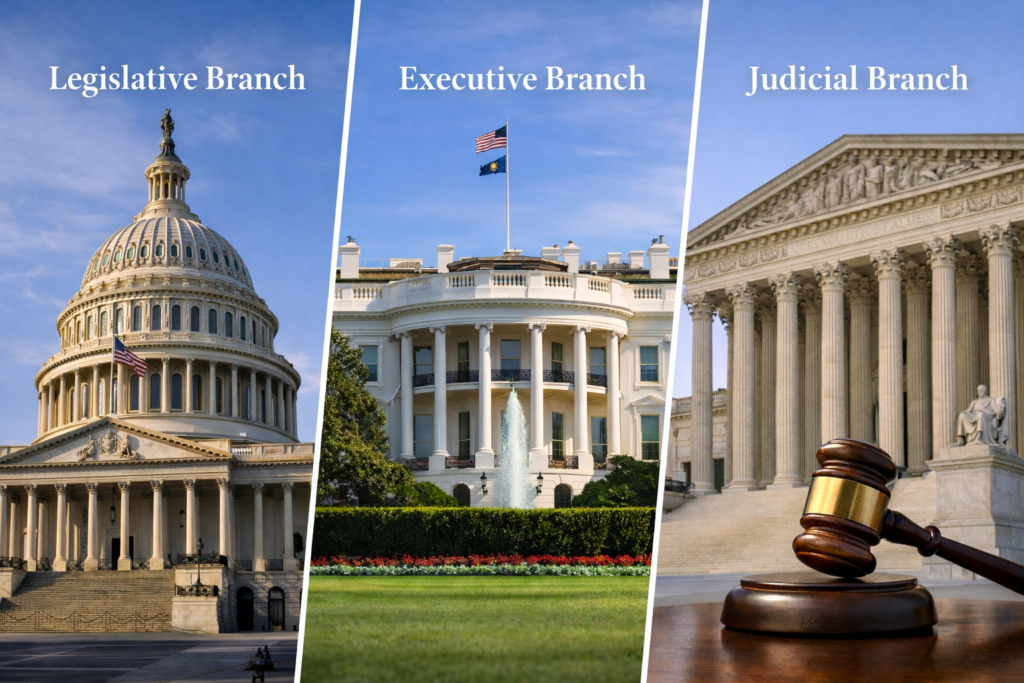
The separation of powers is a foundational principle of modern constitutional governance. It structures the state by dividing authority among distinct institutions, each with defined responsibilities. This design limits the concentration of power and promotes accountable government.
In public finance and governance, the separation of powers shapes how laws are made, funds are allocated, and public authority is exercised.
What Is Separation Of Powers
The separation of powers refers to the division of governmental authority into separate branches. Each branch operates independently within its assigned domain while remaining connected through oversight mechanisms.
This principle is most closely associated with constitutional systems that seek to prevent authoritarian rule and protect individual liberty.
Core Purpose
The primary purpose of separation of powers is to prevent the accumulation of unchecked authority. By dispersing power, governments reduce the risk of abuse and enhance institutional stability.
It also supports predictability in lawmaking and administration, which is essential for sound public finance management.
The Three Branches Of Government
Most constitutional systems organize government into three main branches. Each branch performs distinct functions that together sustain the operation of the state.
Legislative Branch
The legislative branch is responsible for making laws and authorizing public spending. It represents the electorate and serves as the primary forum for public policy debate.
In systems such as that of the United States Congress, the legislature also holds the power of taxation and budget approval.
Executive Branch
The executive branch implements and enforces the law. It manages public administration, oversees government agencies, and executes the budget approved by the legislature.
The executive typically includes the head of government, cabinet members, and the civil service, forming the operational core of the state.
Judicial Branch
The judicial branch interprets laws and resolves disputes. It ensures that legislative and executive actions conform to the constitution and legal standards.
Courts such as the Supreme Court play a critical role in safeguarding constitutional limits.
Checks And Balances
Separation of powers is reinforced through checks and balances. These mechanisms allow each branch to limit or review the actions of the others.
Rather than operating in isolation, the branches are interdependent by design.
How Checks Operate
Checks and balances function through legal and procedural tools embedded in constitutional frameworks.
Common examples include:
- Legislative oversight of executive spending
- Executive veto of legislation
- Judicial review of laws and administrative actions
- Legislative confirmation of executive appointments
These interactions promote transparency and fiscal discipline.
Separation Of Powers And Public Finance
In public finance, separation of powers is especially significant. Budgetary authority, revenue collection, and expenditure oversight are deliberately divided among branches.
This division reduces the likelihood of misuse of public funds and supports responsible fiscal governance.
Budgetary Accountability
Legislatures typically control budget approval, while executives manage implementation. Courts may intervene when financial actions violate legal or constitutional rules.
This structure reinforces accountability at each stage of the public finance cycle.
Strengths And Limitations
While separation of powers offers substantial benefits, it also presents challenges. Understanding both is essential for evaluating governance performance.
Key Strengths
The principle provides several institutional advantages:
- Prevention of power concentration
- Enhanced accountability
- Protection of constitutional order
- Stability in fiscal and legal systems
Practical Limitations
Separation of powers can also lead to institutional conflict or policy gridlock. Disagreements between branches may delay legislation or budget approval.
Effective governance depends on balancing independence with cooperation.
Conclusion
The separation of powers remains a cornerstone of constitutional government and public finance management. By distributing authority and embedding oversight, it promotes lawful administration and fiscal responsibility.
For governments and citizens alike, this principle underpins trust in public institutions and the sustainable exercise of state power.